
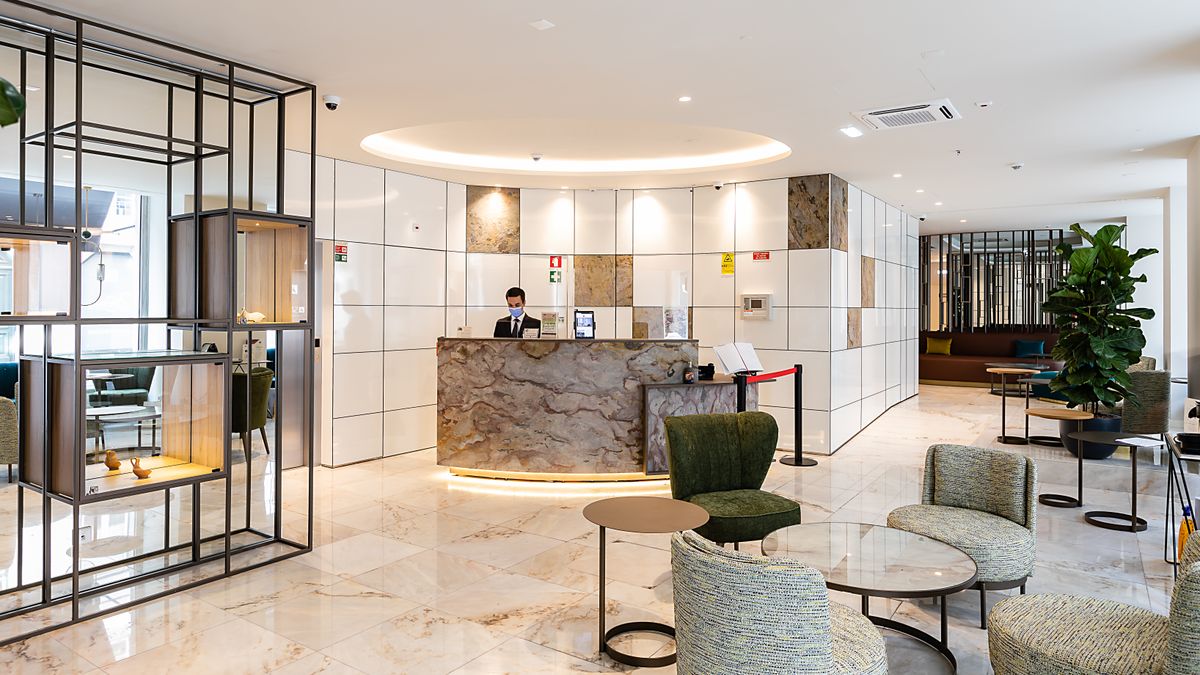
The most comfortable business stay begins before you book a room. Work out where you will actually be spending your hours — the office, the client site, the conference venue — and choose your hotel within a realistic walk or short drive of it. A hotel that looks close on a map can be twenty minutes away once you factor in a ring road, a one-way system or a river with only two crossings.
Transport links matter more than most people admit until the morning of the meeting. If you are arriving by train, check the walk from the station in daylight and in the rain, and note whether the route is lit. If you are driving, confirm three things in writing before you book: that parking is available, whether it costs extra, and whether spaces are reserved for guests or simply first come, first served. In busy UK towns, a hotel with guaranteed parking is worth paying a little more for.
For Cornwall specifically, this planning pays off handsomely. The mainline railway runs down to Truro, Redruth and Penzance, with branch lines to Falmouth, St Ives and Newquay, so a car-free trip is genuinely possible if your meetings sit near those routes. Away from the stations, a car is close to essential, and the A30 and A38 can turn a thirty-minute hop into a ninety-minute crawl on a summer Friday. Build slack into your schedule rather than trusting the satnav.
A comfortable bed is easy to find. A hotel room where you can genuinely work is not. Before booking, ask the hotel directly whether Wi-Fi reaches the bedrooms or only the public areas — this is a common and frustrating gap. Ask what speed guests typically get and whether video calls are reliable. If they cannot answer, that tells you something useful.
Always carry your own backup: a mobile hotspot or tethering plan, plus a decent-length charging cable and a plug adaptor if you are travelling with unfamiliar kit. On arrival, test the connection in your room before you unpack. If it is weak, ask to move immediately rather than battling with it at nine o'clock the following morning.
If the room fails on two or more of these, ask for an alternative. Hotels usually have one or two rooms that are quietly better suited to working guests, and staff are often happy to allocate them.
Noise is the single biggest threat to a productive trip. When you book, request a room away from lifts, stairwells, the bar, the function suite and any ice or vending machine. A top-floor room usually means fewer footsteps overhead, though check whether the lift machinery sits above you and whether the room gets hot under the roof in summer.
Ask whether any weddings, parties or conferences are booked during your stay. A hotel that hosts events can be wonderfully quiet on a Tuesday and thoroughly lively on a Saturday. If you are staying over a weekend, request a room on the opposite side of the building from the function space.
Pack for sleep as well as for work: earplugs, an eye mask if the curtains are thin, and a small travel clock if you would rather not keep your phone by the bed. Close the window against early deliveries and set your alarm with a margin for a slow shower.
Cornwall rewards a slower rhythm, and a business stay here can be genuinely pleasant if you plan around the county's quirks rather than fighting them.
If you are combining work with a little time by the sea, choose a hotel with a comfortable lounge and reliable power so you can work somewhere other than your bedroom. A change of scene at four o'clock does wonders for the last hour of the day.
Ask at check-in rather than suffering in silence. Early breakfast, a packed option if you are leaving before service, an iron and board, a quiet corner for a call, luggage storage after check-out — hotel teams handle these requests constantly and are usually glad to help when asked politely and in advance.
Put the do-not-disturb sign out when you are on calls, and let housekeeping know a convenient time to service the room. Unpack properly, even for two nights; living out of a suitcase quickly wears you down. Keep your usual routine where you can — a proper breakfast, water through the day, a short walk after meetings.
Finally, sort your paperwork before you leave. Give your company details at check-in so the invoice carries the correct name and VAT number, and ask for the receipt at departure rather than chasing it by email a fortnight later. A smooth trip is mostly a matter of small preparations made in advance, and a comfortable room to return to at the end of the day.

Hi, my name is Anthony kuber. I am artist and fashion designer.
I love to travel and writing blogging.
Your email address will not be published. Required fields are marked *
Software Developer & Writer
Hey, I'm Diva, a developer and writer blending code and creativity. I'm driven by a deep curiosity and a relentless pursuit of excellence. Join me as I craft digital solutions and captivating stories.


